 0804580302508045803025


 English
 Spanish
 French
 German
 Italian
 Chinese (Simplified)
 Japanese
 Korean
 Arabic
 Portuguese
 Send Inquiry
 Call Me Free
 Send SMS

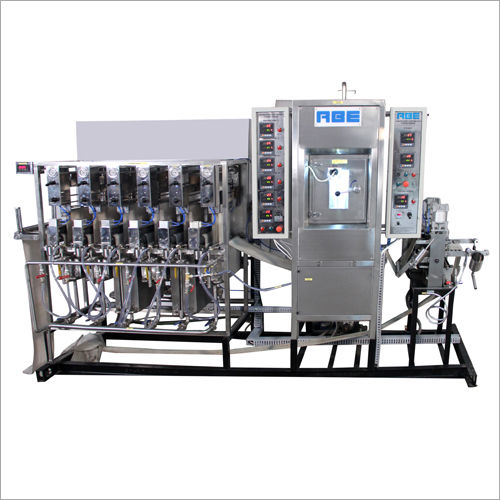
Continuous Dyeing Range
600000.00 - 2200000.00 INR/Unit
Product Details:
- No Of Chamber Multiple (customizable depending on process)
- Type Continuous Dyeing Range
- Features Uniform Dyeing, Low Liquor Ratio, Energy Efficient, Modular Construction
- Volume Varies by operation and dye process
- Control Type PLC & HMI Controlled
- Weight Approx. 18-25 Tons (varies by configuration)
- Condition New
- Click to View more
X
Continuous Dyeing Range Price And Quantity
- 1 Unit
- 600000.00 - 2200000.00 INR/Unit
Continuous Dyeing Range Product Specifications
- Multiple (customizable depending on process)
- 1600 mm 3400 mm
- Continuous Dyeing Range
- Uniform Dyeing, Low Liquor Ratio, Energy Efficient, Modular Construction
- Varies by operation and dye process
- 16,000 mm x 3,800 mm x 3,400 mm (typical)
- New
- Woven & Knitted Fabrics
- Continuous Dyeing of Fabrics in Textile Industries
- Approx. 18-25 Tons (varies by configuration)
- PLC & HMI Controlled
- 380V / 415V, 3 Phase, 50 Hz
- High-Efficiency Dye Circulation Pump
- 45 kW (may differ based on model)
- Room Temperature to 105C
- Continuous/On Demand (varies per shift)
- Cotton, Blended, Synthetics
- Up to 80 m/min
- 2024
- Automatic Textile Dyeing Machine
- On-site installation and commissioning available
- Pad-Dry, Pad-Steam, Pad-Thermo-Sol, or Pad-Jig processes
- Automatic synchronized dosing system
- Siemens / Schneider or equivalent
- Emergency stop, Overload protection, Safety interlocks
- Optimized low water usage design
- AC frequency control motor drive
- Minimized quick wash system
- Steam / Electric Heating
- Fully automatic
- Corrosion resistant stainless steel
Continuous Dyeing Range Trade Information
- 10 Unit Per Month
- 2-12 Week
- Standard Packaging
- All India
- ISO 9001:2000 and ISO 9001:2008
Product Description
Continuous dyeing range is perfect for small to large batch of continuous dyeing, or curing procedure. It supports various combinations, and is highly efficient. The range operates in a low fabric tension, migration-free and crease-free condition. With perfect determination of heat-setting point & speed control, it gives optimum results. Hence you can achieve cost-effective machine utilization. The continuous dyeing machine is suitable for various kinds of fabrics, such as cotton, woven, T/C & pure polyester fabrics. Also, there is a good capacity range and different fields of applications.
Features/ Functions of Continuous Dyeing Range:
- Sophisticated air-flow control & intelligent drive concept
- Exact shade uniformity across the length & width of the fabric
- Re-producible dyeing results
- Best dye uniformity, no tailing and no migration
- Minimal consumption of electrical and thermal energy
- Designed for maximum productivity and easy access for cleaning/maintenance
Specification
Minimum Order Quantity | 1 Unit Onwards |
Electric supply | 415 V |
Thermofixing | 210 Degree C |
Steam Super heating | 185 Degree C |
Saturated steaming | 104 Degree C |
Phase | 3 Phase |
Maximum working width | 300mm/1200mm |
Material Of Construction | SS 304 & SS316 |
Superior Automation and Control
Equipped with advanced PLC and HMI controls from leading brands like Siemens or Schneider, the machine supports fully automatic operations. Operators can monitor and adjust all dyeing parameters with precision, ensuring fabric quality remains consistent from start to finish.
Optimized Resource Efficiency
Featuring a low liquor ratio and a highly efficient dye circulation pump, the system minimizes water and energy consumption. The automatic synchronized dosing system enhances chemical usage efficiency, making the process both cost-effective and environmentally conscious.
Flexible Dyeing Methods and Applications
This dyeing range accommodates a variety of methodsPad-Dry, Pad-Steam, Pad-Thermo-Sol, and Pad-Jigsuitable for a broad spectrum of textile materials. Its modular construction allows for customization based on fabric type and production requirements.
FAQs of Continuous Dyeing Range:
Q: How does the Continuous Dyeing Range achieve uniform dyeing across different fabric types?
A: The machine utilizes corrosion-resistant stainless steel rollers, a high-efficiency circulation pump, and automatic synchronized dosing to ensure even dye distribution, resulting in consistent color intensity for cotton, blends, and synthetic fabrics.Q: What dyeing methods are supported by this range, and when should each method be used?
A: This system supports Pad-Dry, Pad-Steam, Pad-Thermo-Sol, and Pad-Jig processes. The suitable method depends on fabric composition and desired dye penetration, with each process tailored for optimal results on woven or knitted materials.Q: Where can the Continuous Dyeing Range be installed, and does it include installation support?
A: This equipment is designed for textile industry use and is suitable for both new and existing manufacturing facilities. On-site installation and commissioning services are available to ensure smooth setup and operation.Q: What benefits does the optimized low water usage design offer?
A: The low liquor ratio and efficient water circulation system not only reduce overall water consumption, but also lower operational costs and environmental impact, aligning with sustainable manufacturing practices.Q: How does the machine enable quick color changes during production?
A: The system integrates a rapid wash module, which minimizes downtime between color changes by quickly cleaning the dyeing circuit, allowing for efficient transitions and greater production flexibility.Q: What safety features are implemented in this dyeing machine?
A: Safety systems include an emergency stop, overload protection, and multiple safety interlocks, ensuring both operator and machine protection during operation.Q: What is the typical speed and capacity of the Continuous Dyeing Range?
A: The machine operates at speeds up to 80 meters per minute, with output capacity varying depending on shift duration, process settings, and fabric type, accommodating both continuous and on-demand production.Tell us about your requirement

Price:
Quantity
Select Unit
- 50
- 100
- 200
- 250
- 500
- 1000+
Additional detail
Mobile number
Email

Other Products in 'Continuous Dyeing Machine' category
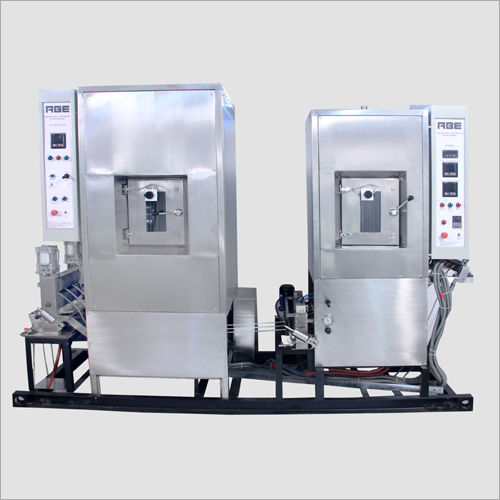
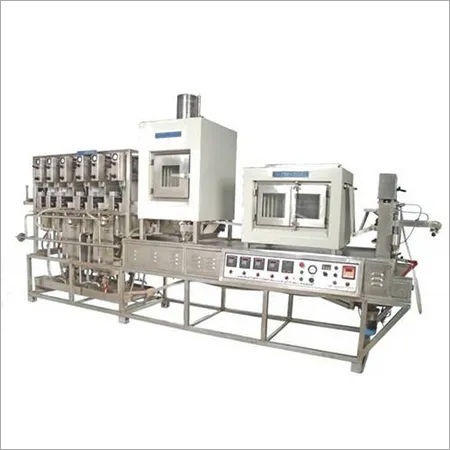

We export in USA Indonesia, Vietnam, Bangladesh, Ethiopia, Uzbekistan, Sri Lanka, Philippines, Turkey and Mexico.
R. B ELECTRONIC & ENGINEERING PVT. LTD.
GST : 24AABCR2885E1ZH
GST : 24AABCR2885E1ZH
Contact Details

- Plot No.413/2, GIDC, CHANOD,Chanod - 396195, Gujarat, India
- Phone : 08045803025

- Mr. Deepak (Business Development Executive)
- Mobile : 08045803025
- Send Inquiry
 Send Inquiry
 Send Inquiry
 Call Me Free
 Send SMS
Products Gallery

|


 |
R. B ELECTRONIC & ENGINEERING PVT. LTD.
All Rights Reserved.(Terms of Use) Developed and Managed by Infocom Network Private Limited. |
