 0804580302508045803025


 English
 Spanish
 French
 German
 Italian
 Chinese (Simplified)
 Japanese
 Korean
 Arabic
 Portuguese
 Send Inquiry
 Send SMS

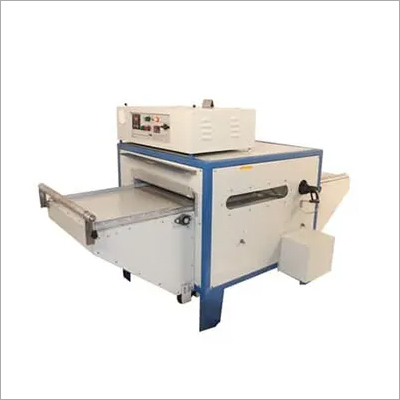
Textile Curing Chamber
265000 INR/Piece
Product Details:
- Test Material Fabric, Textile Samples
- Specimen Size 300 x 120 mm
- Port Size Standard
- Humidity 40% 95% RH
- Test Range Ambient to 250C
- Temperature 0C to 250C
- Number of Specimens 4
- Click to View more
X
Textile Curing Chamber Price And Quantity
- 1 Piece
- 265000 INR/Piece
Textile Curing Chamber Product Specifications
- 4
- 1200 x 950 x 800 mm
- 0C to 250C
- Electric
- Textile Industry
- Textile Finishing
- Ambient to 250C
- 230 kg
- 40% 95% RH
- Standard
- Curing Chamber
- Fabric, Textile Samples
- 300 x 120 mm
- Mild Steel
Textile Curing Chamber Trade Information
- 1-10 Piece Per Month
- 2-12 Week
- Standard Packaging
- All India
- ISO 9001:2000 and ISO 9001:2008
Product Description
With the help of our distinguished professionals, our company has been able to mark its strong presence in the market as one of the well known manufacturers, suppliers and exporters of Textile Curing Chamber. Our offered range is easy to operate, durable and require minimum maintenance. These are manufactured by us using quality based raw materials. During curing, drying and thermo fixation of samples, Textile Curing Chamber is widely used in textile industries.
Further details:
Features ofTextile Curing Chamber
Further details:
Features ofTextile Curing Chamber
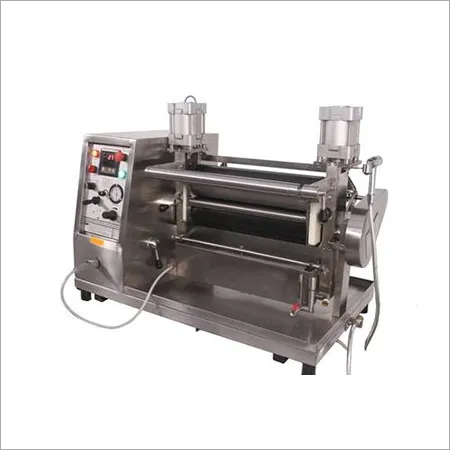
- Working width 450mm, 600mm.
- Speed control for variable dwell time of 30 seconds to 5 minutes.
- Internal heater provided for pre heating.
- Electrical heating for temperature up to 250C
- Heating zone length: 1000mm.
- Adjustable air flow to avoid migration.
- Can be used either for small sizes of samples or for continuous fabric length.
- Can be synchronized with Laboratory Vertical Padding Mangle for continuous padding, drying and curing/setting process.
Technical Specifications
M/C With IR pre-drier
- Heating zone length: 1000mm
- Heating Load with IR pre drier 16kW for 450 mm and 600 mm
- Heating control: Through the Microprocessor controller
- (450 mm working width): L 2750mmxW1000mmxH1200mm,
- (600mm working width)L 2750mmx1150mmx1200mm
1600mm working width
- Approx. Net and Gross Weight
- (450mm working width), (600mm working width) , (1850mm Working width)
- Electrical Supply: 415V Three , 50Hz
Designed for Modern Textile Finishing
This curing chamber is tailored for demanding textile finishing processes, ensuring textiles and fabric samples receive precise thermal and humidity treatment. Its advanced control system allows accurate adjustment of temperature and humidity, supporting a wide test range. The chambers durable mild steel construction makes it suitable for continuous use in industrial environments.
Versatile and User-Friendly Operation
Accommodating up to four specimens at once, the curing chamber streamlines your workflow, enhancing productivity in textile testing and finishing applications. The standard port size simplifies specimen placement and retrieval, while intuitive controls make it easy for operators to manage test conditions with accuracy.
FAQs of Textile Curing Chamber:
Q: How does the Textile Curing Chamber facilitate the textile finishing process?
A: The curing chamber provides controlled temperature and humidity conditions, allowing textiles and fabric samples to be cured evenly and efficiently. By ensuring these parameters are maintained precisely, the chamber improves the quality and consistency of the textile finishing process.Q: What materials and specimen sizes are supported by this curing chamber?
A: This chamber is designed to accommodate up to four specimens made of fabric or textile materials, each with maximum dimensions of 300 x 120 mm. The devices internal space ensures convenient and simultaneous curing of multiple samples.Q: When should I use the curing chamber in textile sample preparation?
A: Use the curing chamber after preparing or applying any finishing treatment to the textile sample. It is ideal for curing, drying, or setting finishes, thereby solidifying and enhancing the durability of the treatment on your samples.Q: Where can this textile curing chamber be installed in a production setup?
A: The chamber can be set up in textile manufacturing plants, research laboratories, or quality control departments. Its robust build and standard port size make it flexible for integration into various industrial environments.Q: What is the process for operating the Textile Curing Chamber?
A: Users place textile or fabric specimens onto the designated holders, set the desired temperature (0C to 250C) and humidity (40%-95% RH) via the digital controller, and run the curing cycle. The electric heating system ensures uniform conditions throughout the chamber.Q: How does using this chamber benefit textile manufacturers?
A: The chamber delivers uniform curing and consistent test results, which enhance the quality, durability, and overall finish of textile products. It can improve efficiency by handling multiple specimens and reduce processing errors through precise environment control.Tell us about your requirement

Price:
Quantity
Select Unit
- 50
- 100
- 200
- 250
- 500
- 1000+
Additional detail
Mobile number
Email

Other Products in 'Laboratory Finishing Machine' category



We export in USA Indonesia, Vietnam, Bangladesh, Ethiopia, Uzbekistan, Sri Lanka, Philippines, Turkey and Mexico.
R. B ELECTRONIC & ENGINEERING PVT. LTD.
GST : 24AABCR2885E1ZH
GST : 24AABCR2885E1ZH
Contact Details

- Plot No.413/2, GIDC, CHANOD,Chanod - 396195, Gujarat, India
- Phone : 08045803025

- Mr. Deepak (Business Development Executive)
- Mobile : 08045803025
- Send Inquiry
 Send Inquiry
 Send Inquiry
 Send SMS
Products Gallery

|


 |
R. B ELECTRONIC & ENGINEERING PVT. LTD.
All Rights Reserved.(Terms of Use) Developed and Managed by Infocom Network Private Limited. |
