 0804580302508045803025


 English
 Spanish
 French
 German
 Italian
 Chinese (Simplified)
 Japanese
 Korean
 Arabic
 Portuguese
 Send Inquiry
 Send SMS

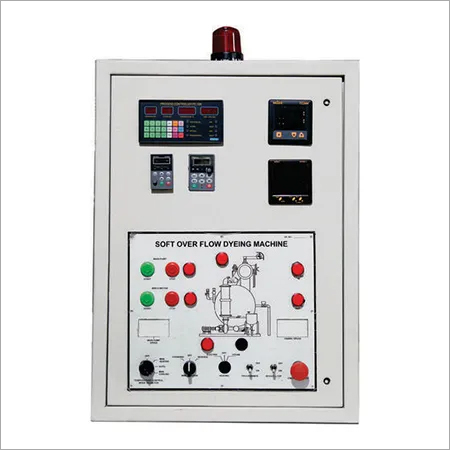
Fabric Dyeing Machine Control Panel
200000.00 - 500000.00 INR/Piece
Product Details:
- Cooling System Natural Air Ventilation
- Thickness 2 mm
- Current Rating 250A
- Control System Automatic/Manual Switchable
- Rated Current 250A
- Components MCB, Contactors, Overload Relays, Indicating Lamps, Push Buttons
- Rated Insulation Voltage 690V
- Click to View more
X
Fabric Dyeing Machine Control Panel Price And Quantity
- 200000.00 - 500000.00 INR/Piece
- 1 Piece
Fabric Dyeing Machine Control Panel Product Specifications
- 415V AC
- Mild Steel
- IP55
- 415V AC
- IP55
- Powder Coated Steel
- Fabric Dyeing Machine Control Panel
- 3 Way
- Gray with Blue Accents
- Powder Coated MS Sheet
- Corrosion-resistant, User-friendly Interface, Safety Interlocks
- 415V
- Terminal Block
- Class I
- Floor Mounted
- 1200mm x 800mm x 400mm
- Industrial Dyeing Machinery
- Powder Coated
- Digital & LED Indicators
- 250A
- 250A
- Automatic/Manual Switchable
- 2 mm
- Natural Air Ventilation
- 250A
- IEC 61439
- MCB, Contactors, Overload Relays, Indicating Lamps, Push Buttons
- 690V
- 50 Hz
- Mild Steel
- Dust & Water Resistant
- Single Front Door with Lock
- ISI Marked Copper Cable
- Three Phase
- CE Marked, RoHS Compliant
- 24V / 110V / 230V AC
- Up to 95% RH (Non-condensing)
- Provided with Copper Earth Busbar
- 0C to 50C
- 380V - 440V AC
- Floor Standing / Freestanding
- Bottom and Top
- Approx. 110 kg
- Provided for Cable and Instrumentation Access
Fabric Dyeing Machine Control Panel Trade Information
- 10 Piece Per Month
- 2-12 Week
Product Description
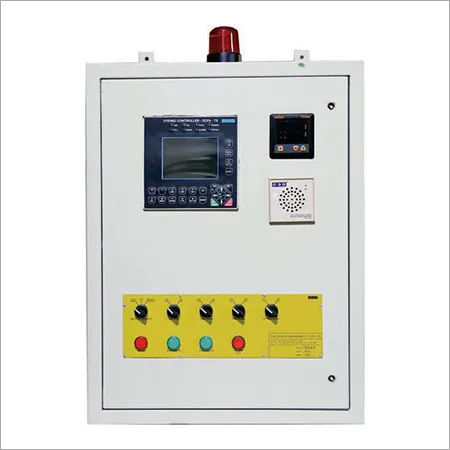
RBE offers Control Panel for Fabric Dyeing Machines like for Soft Overflow Dyeing Machine. Fabric Dyeing Machine Control Panel is equipped with controller DCF4-TS which is designed & developed in house.
Fabric Dyeing Machine Control Panel Features:
- Easy to use with advanced features
- User friendly operational logic
- Control of Heating, Dosing, Water Level, Main Pump
- Progressive / Regressive / Linear dosing functions
- 14cm Color Screen
- Water saving functions
- Intelligent logic for process time saving
- More than 40 Programs, with no of steps can be stored
- Seam detector logic
- Different types of operator calls
- PC4 / PC10 - Semi Automatic Control Panel
- DCF4-TS Fully Automatic Control Panel
- Simplex 260 / 520 Fully Automatic Control Panel
Built for Demanding Dyeing Environments
Engineered for industrial dyeing machinery, this floor-standing control panel boasts a corrosion-resistant, powder-coated steel enclosure. Its IP55 protection ensures optimal performance against dust and water, while a 95% non-condensing humidity tolerance makes it robust for textile plant conditions. Advanced cooling and earthing provisions enhance operational lifetime.
Flexible and Compatible Installation
With bottom and top cable entry provisions and a universal 3-way floor mounting design, this control panel easily integrates with a wide range of dyeing machines. Its precise dimensions, single front door with lock, and panel cut-outs for cables and instrumentation allow for safe, straightforward setup and maintenance.
Reliable Safety and Monitoring Features
The control panel comes with built-in MCBs, contactors, overload relays, and safety interlocks, ensuring the utmost protection for equipment and personnel. Digital and LED indicators provide comprehensive monitoring, and natural air ventilation maintains internal component temperature within safe limits, safeguarding machine operation.
FAQs of Fabric Dyeing Machine Control Panel:
Q: How is the fabric dyeing machine control panel installed and where can it be mounted?
A: The panel is designed for floor-standing or freestanding installation and can be securely mounted in industrial dyeing workshops. Its dimensions (1200mm x 800mm x 400mm) and cable entry provisions (top and bottom) allow flexible placement and connection to machine cables, making it suitable for new setups or upgrades.Q: What are the main benefits of using this control panel in dyeing processes?
A: Key benefits include a corrosion-resistant, dust and water-resistant enclosure for harsh environments, safety features like interlocks and overload protection, and a user-friendly interface for simplified control. Compliance with IEC 61439, CE, and RoHS standards ensures operational reliability and safety.Q: What is the operating voltage and current rating of this control panel?
A: The panel operates at a rated voltage of 415V AC, with an input voltage range of 380V440V AC, and supports a maximum output and rated current of 250A. This makes it suitable for high-power dyeing equipment typically used in the textile industry.Q: How does the control system function, and what display types are provided?
A: The panel supports both automatic and manual switchable operation modes for versatile control. It features a combination of digital and LED indicators for real-time monitoring of system status and parameters, making operation straightforward and efficient.Q: What makes this panel durable and suitable for industrial environments?
A: Constructed from 2mm thick mild steel and finished with powder coating, the panel resists corrosion, wear, and impacts. Its IP55 rating ensures protection against dust and water ingress, while heavy-duty components and ISI-marked internal wiring enhance durability.Q: When should the panel be maintained, and what is the recommended process?
A: Routine inspection is recommended every 6 to 12 months, depending on usage. Maintenance involves checking electrical connections, cleaning air vents to ensure proper ventilation, and verifying the operation of safety interlocks, relays, and indicators. Always ensure power is disconnected before any inspection.Tell us about your requirement

Price:
Quantity
Select Unit
- 50
- 100
- 200
- 250
- 500
- 1000+
Additional detail
Mobile number
Email

Other Products in 'Control Panel for Dyeing Machine' category
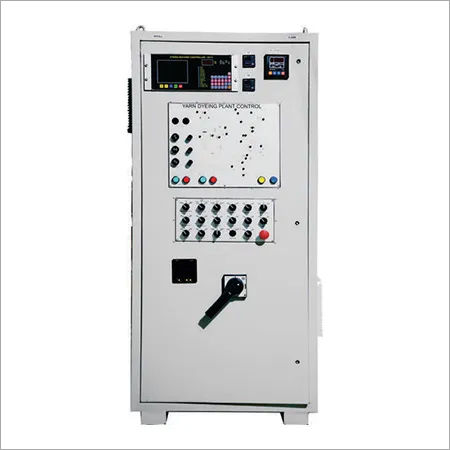

We export in USA Indonesia, Vietnam, Bangladesh, Ethiopia, Uzbekistan, Sri Lanka, Philippines, Turkey and Mexico.
R. B ELECTRONIC & ENGINEERING PVT. LTD.
GST : 24AABCR2885E1ZH
GST : 24AABCR2885E1ZH
Contact Details

- Plot No.413/2, GIDC, CHANOD,Chanod - 396195, Gujarat, India
- Phone : 08045803025

- Mr. Deepak (Business Development Executive)
- Mobile : 08045803025
- Send Inquiry
 Send Inquiry
 Send Inquiry
 Send SMS
Products Gallery

|


 |
R. B ELECTRONIC & ENGINEERING PVT. LTD.
All Rights Reserved.(Terms of Use) Developed and Managed by Infocom Network Private Limited. |
